Macau's Secretary for Economy and Finance Resigns Abruptly: Tai Kin Ip Steps Down Citing Personal Reasons
Written by Viktor Coleman · Apr 16, 2026

Macau's Secretary for Economy and Finance Resigns Abruptly: Tai Kin Ip Steps Down Citing Personal Reasons
The Sudden Departure in April 2026
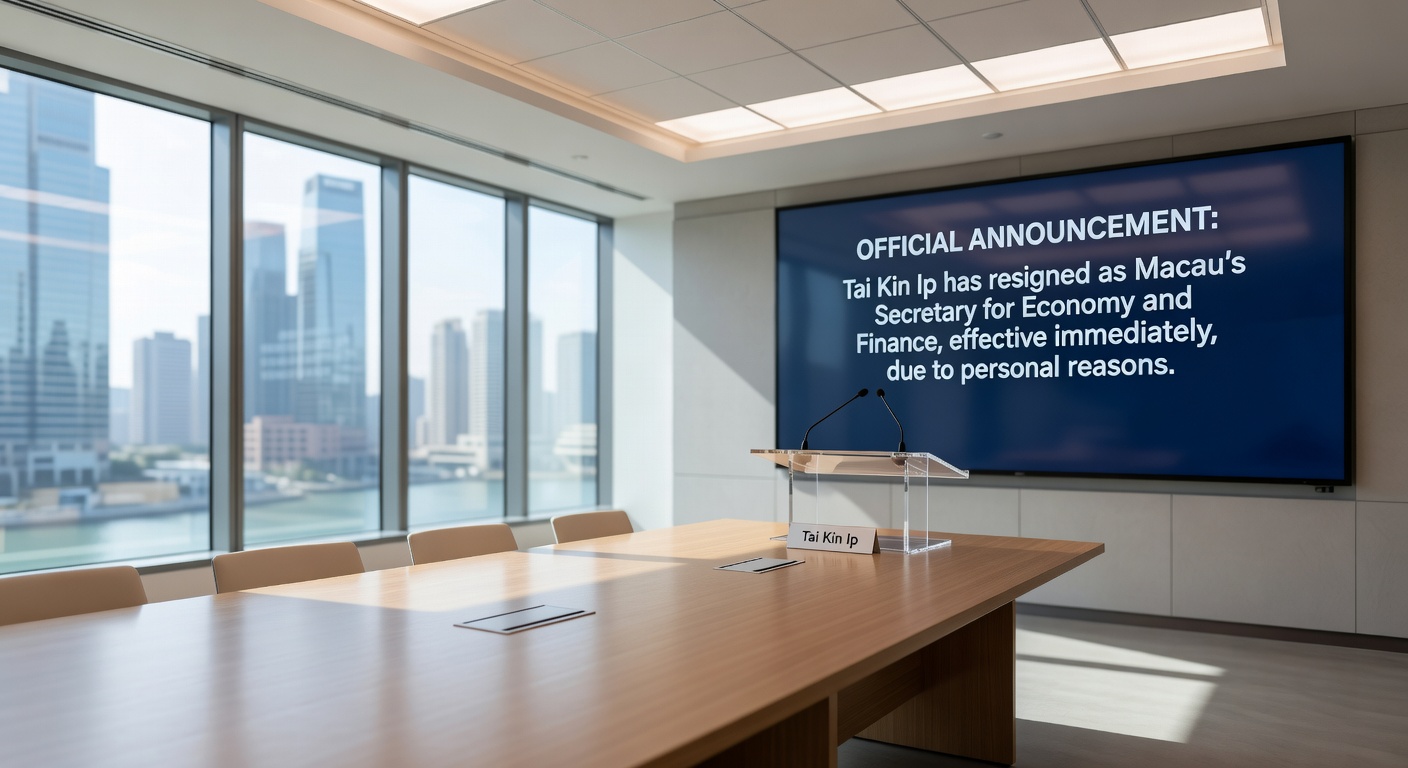
Tai Kin Ip, who had served as Macau's Secretary for Economy and Finance since late 2024, resigned on April 16, 2026, citing personal reasons; the move, proposed by Chief Executive Sam Hou Fai, received swift approval from China's State Council, taking effect immediately in the special administrative region known globally as the world's largest gambling hub. According to Reuters, this unexpected shift places interim responsibilities squarely on Sam Hou Fai's shoulders while authorities scramble to nominate a successor for Beijing's nod. And just like that, the man overseeing a staggering $30 billion gambling industry hands over the reins, leaving observers to watch how the transition unfolds in real time.
What's interesting here is the speed of it all; approvals from the central government in Beijing typically involve layers of review, yet this one cleared without delay, signaling the urgency or perhaps the straightforward nature of the personal grounds cited. Those familiar with Macau's tightly knit political structure note that such positions, blending economy and finance, carry immense weight, especially in a place where gaming revenue funds nearly 80% of the government's budget, according to figures from the Macau Gaming Inspection and Coordination Bureau.
Tai Kin Ip's Tenure Over the Gambling Giant
Since stepping into the role in late 2024, Tai Kin Ip directed policies shaping Macau's casino landscape, home to six major concessionaires: Sands China, Wynn Macau, MGM China, SJM Holdings, Melco Resorts, and Galaxy Entertainment; these operators collectively generated around $30 billion in gross gaming revenue during his watch, rebounding from pandemic lows through diversification into non-gaming attractions like concerts, retail, and entertainment complexes. Researchers tracking the sector point out that under his oversight, authorities pushed for stricter compliance on anti-money laundering measures while encouraging investments in high-end tourism, moves that helped gross gaming revenue climb toward pre-COVID peaks by early 2026.
But here's the thing: Macau's economy hinges on this industry more than anywhere else, with visitor numbers surging past 30 million annually by 2025, driven by mainland Chinese tourists who account for over 70% of gamblers; Tai navigated challenges like regulatory tweaks from Beijing aimed at curbing capital outflows, all while balancing the books for a sector that employs tens of thousands directly and fuels ancillary businesses from hotels to transport. Experts who've studied the region's fiscal reports reveal that during his approximately 18 months, budget surpluses supported infrastructure projects, including expansions at the Cotai Strip where mega-resorts blend casinos with theme parks and luxury shopping.
Take Sands China, for instance, which operates the Venetian Macao, the world's largest casino by gaming space; under Tai's administration, it reported revenues topping $8 billion in recent fiscal years, while Wynn Macau focused on VIP baccarat rooms that draw whales from across Asia. SJM Holdings, the only local concessionaire rooted in Stanley Ho's legacy, adapted by launching integrated resorts like the Grand Lisboa Palace, and Melco Resorts emphasized family-friendly zones at City of Dreams alongside its gaming floors. Galaxy Entertainment, meanwhile, expanded its mass-market appeal with properties like Galaxy Macau, where non-gaming revenue now rivals gaming in some quarters; MGM China rounded out the group by prioritizing sustainability initiatives, all aligned with directives from the Secretary's office.
Behind the Role: Steering Economy and Finance in a Gaming-Dominated Hub
The Secretary for Economy and Finance doesn't just rubber-stamp casino licenses; the position coordinates fiscal policy, tourism promotion, and trade relations, particularly with the mainland, where cross-border travel quotas influence daily footfall; Tai Kin Ip managed these levers amid economic recovery efforts post-2022 slumps, implementing tax incentives for operators investing in non-gaming sectors that now contribute up to 10% of total revenue, data from industry trackers shows. And while personal reasons prompted his exit, his departure caps a period of stabilization after years of volatility, with monthly gaming taxes alone exceeding $2 billion at peaks during 2025.
Observers note the interconnectedness: fluctuations in baccarat play, which dominates 80% of table games, directly impact government coffers, and Tai's team fine-tuned concession terms expiring in 2022 but extended amid recovery, ensuring continuity for the big six. That's where the rubber meets the road for Macau, a former Portuguese enclave turned SAR in 1999, whose GDP per capita rivals Singapore's thanks to this golden goose; studies from Hong Kong-based think tanks highlight how finance secretaries like Ip balance Beijing's oversight with local needs, from labor imports to infrastructure bonds funding the Hong Kong-Zhuhai-Macau bridge.
Yet transitions like this aren't unprecedented; past secretaries have navigated Beijing's anti-corruption drives, which occasionally reshuffle leadership, although Ip's case sticks to personal grounds without further elaboration from official channels. People who've followed these beats recall similar immediacy in approvals, underscoring the central government's hands-on role in SAR governance as per the Basic Law.
Interim Leadership and the Road to a Successor
With Tai Kin Ip out as of April 16, 2026, Chief Executive Sam Hou Fai assumes the duties temporarily, a common practice in Macau's executive-led system where the leader, elected by a Beijing-vetted committee, proposes high-level appointments; authorities have already signaled preparations for a nominee, likely drawn from financial or gaming regulatory circles, pending State Council review that could wrap in weeks given precedents. So now the ball's in their court to maintain momentum in an industry eyeing 2026 growth projections around $35 billion, buoyed by relaxed travel from the mainland.
During this interim, Sam Hou Fai, who took office in late 2024 amid post-pandemic resets, will juggle the portfolio alongside his CEO responsibilities, focusing on ongoing diversification mandates that require operators to hit non-gaming investment thresholds or risk concessions. It's noteworthy that this setup minimizes disruptions, as fiscal calendars align with quarterly revenue reports, and the Gaming Inspection Bureau handles day-to-day enforcement independently.
One case where experts found smooth handovers involved a 2022 deputy shift, where duties transferred without revenue dips; similarly, here, with Q2 2026 audits looming, continuity in policy signals stability to investors from Las Vegas Sands to Galaxy's local backers. And although details on Ip's successor remain under wraps, patterns suggest a technocrat with audit or banking experience, vetted for alignment with national security laws.
Implications for Macau's Gaming Ecosystem
Macau's $30 billion industry, which Tai Kin Ip shepherded, represents more than neon lights and high-stakes tables; it underpins a workforce of over 80,000 in casinos alone, with supply chains rippling into construction, hospitality, and even agriculture for resort kitchens, all while generating taxes that fund free education, healthcare, and public housing for 700,000 residents. Figures reveal that since late 2024, visitor arrivals hit record highs, surpassing 40 million projected for 2026, fueled by direct flights and high-speed rail links easing access from Guangdong province.
But the real test comes in how this leadership pivot affects Beijing's broader vision for the Greater Bay Area, integrating Macau as a tourism and leisure node alongside Hong Kong's finance hub; under Ip, pilot programs for medical tourism and e-sports arenas emerged, diversifying beyond pure gambling that once peaked at $45 billion pre-pandemic. Those who've analyzed concession renewals observe that stability in the Secretary's office reassures shareholders, with stocks of listed operators like Melco and Wynn showing resilience post-announcement.
Now, as April 2026 heats up, the focus shifts to quarterly earnings where mass-market growth, up 20% year-over-year, offsets VIP slowdowns from economic headwinds in China; Ip's policies laid groundwork for these trends, emphasizing tech integrations like cashless wagering and AI-driven player analytics across floors from SJM's traditional haunts to MGM's modern venues.
Looking Ahead: Stability in the Spotlight
This resignation, effective immediately in mid-April 2026, underscores the fluid yet controlled nature of Macau's leadership amid its economic reliance on gaming; with Sam Hou Fai at the helm interim-style and a successor nomination underway, the $30 billion machine grinds on, operators like Sands China and Galaxy Entertainment reporting steady play volumes that signal investor confidence. Data indicates minimal short-term jolts, as entrenched regulations and Beijing's backing provide guardrails; ultimately, the path forward hinges on seamless approval of the next Secretary, ensuring the gambling capital's engines keep humming through 2026 and beyond.