Sensor Fusion Techniques Shaping Dynamic Reward Systems in Portable Interactive Gaming Applications
Written by Iris Neumann · Aug 24, 2026

Sensor Fusion Techniques Shaping Dynamic Reward Systems in Portable Interactive Gaming Applications
Portable interactive gaming applications rely on multiple onboard sensors to collect contextual data, and sensor fusion combines inputs from accelerometers, gyroscopes, magnetometers, GPS modules, and cameras to produce accurate player state estimates. These fused outputs feed into reward algorithms that adjust bonuses, multipliers, and unlock conditions based on movement patterns, orientation changes, and environmental variables rather than static rules.
Core Sensor Fusion Methods in Mobile Gaming
Developers implement Kalman filters and extended Kalman filters to merge noisy inertial measurements with GPS coordinates, reducing drift errors that single-sensor systems accumulate during extended play sessions. Particle filters handle nonlinear dynamics when games incorporate camera-based visual odometry alongside motion data, allowing reward triggers to respond to both physical gestures and location accuracy thresholds. Research from institutions such as the University of Waterloo indicates that fused sensor pipelines achieve positioning errors below 0.5 meters in urban environments where standalone GPS readings fluctuate by several meters.
Complementary filtering techniques offer lower computational overhead for mid-range smartphones, blending high-frequency accelerometer readings with lower-frequency GPS updates to maintain smooth reward progression curves. In August 2026 several mid-tier device manufacturers released firmware updates that exposed additional magnetometer calibration APIs, enabling game engines to correct heading drift more reliably during augmented-reality segments.
Dynamic Reward Logic Driven by Fused Data
Reward systems translate fused sensor outputs into game-state variables such as velocity vectors, tilt angles, and dwell times at specific coordinates. A player who maintains steady walking speed while holding the device at a consistent angle may receive incremental point multipliers, whereas abrupt orientation shifts detected through gyroscope fusion can activate time-limited bonus rounds. Location-based titles adjust prize eligibility when fused GPS and Wi-Fi positioning confirm presence inside geofenced zones with sub-meter precision.
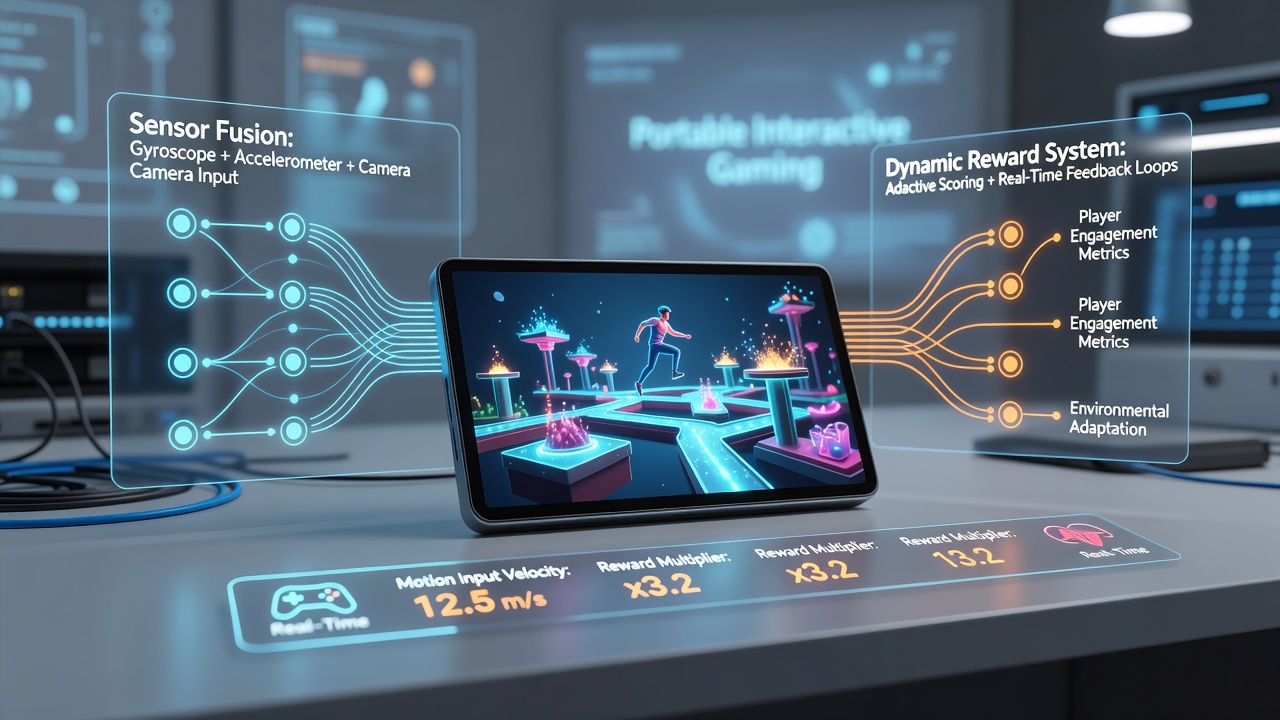
Studies published by the Commonwealth Scientific and Industrial Research Organisation demonstrate that games using multi-sensor fusion record 18 percent higher session retention compared with accelerometer-only implementations, because reward timing aligns more closely with actual player behavior. Developers calibrate these systems through supervised learning models trained on anonymized motion traces collected across diverse device models and network conditions.
Integration Challenges and Platform Constraints
Battery consumption rises when continuous fusion pipelines run at high sampling rates, prompting developers to implement duty-cycling strategies that activate full sensor suites only during reward-critical events. Operating system restrictions on background location access further require games to request foreground permissions at precise moments, ensuring fused data streams remain available without violating platform policies. Cross-device variance in sensor quality necessitates per-model calibration tables that game servers distribute dynamically during app updates.
Network latency between the device and reward servers can desynchronize local sensor fusion outputs with server-side validation, leading studios to embed lightweight verification hashes computed from fused readings directly into reward claims. European regulatory bodies tracking digital entertainment metrics reported in mid-2026 that standardized sensor-fusion testing protocols reduced false-positive reward claims by 27 percent across participating platforms.
Future Directions in Adaptive Gaming Incentives
Emerging frameworks combine sensor fusion with edge computing nodes to offload heavy filtering tasks, freeing mobile CPUs for higher-fidelity graphics while preserving low-latency reward updates. Machine-learning models trained on fused datasets now predict optimal reward schedules that adapt to individual movement signatures, extending playtime without manual tuning. Observers note that as 5G and upcoming 6G deployments reduce transmission delays, real-time fusion of additional biometric sensors such as heart-rate monitors will become feasible in consumer titles.
Conclusion
Sensor fusion supplies the contextual accuracy required for reward systems that respond fluidly to player actions in portable environments. Continued refinement of filtering algorithms alongside hardware improvements positions these techniques as foundational elements for next-generation interactive gaming applications across global markets.